 MAKE AN ENQUIRY
 CALL US

Sliding Doors vs French Doors: Choosing The Best Option
When it comes to connecting your home to a patio, deck, or garden, the choice usually comes down to two options: sliding doors or French doors. Both open up a space beautifully, but they do it in very different ways, and the right choice depends on your opening, your layout, and how you actually plan to use the space.
At Vue Windows, we supply and install both. So rather than pushing you toward one option, this guide gives you an honest, practical comparison to help you decide what’s right for your home.
What Are French Doors?
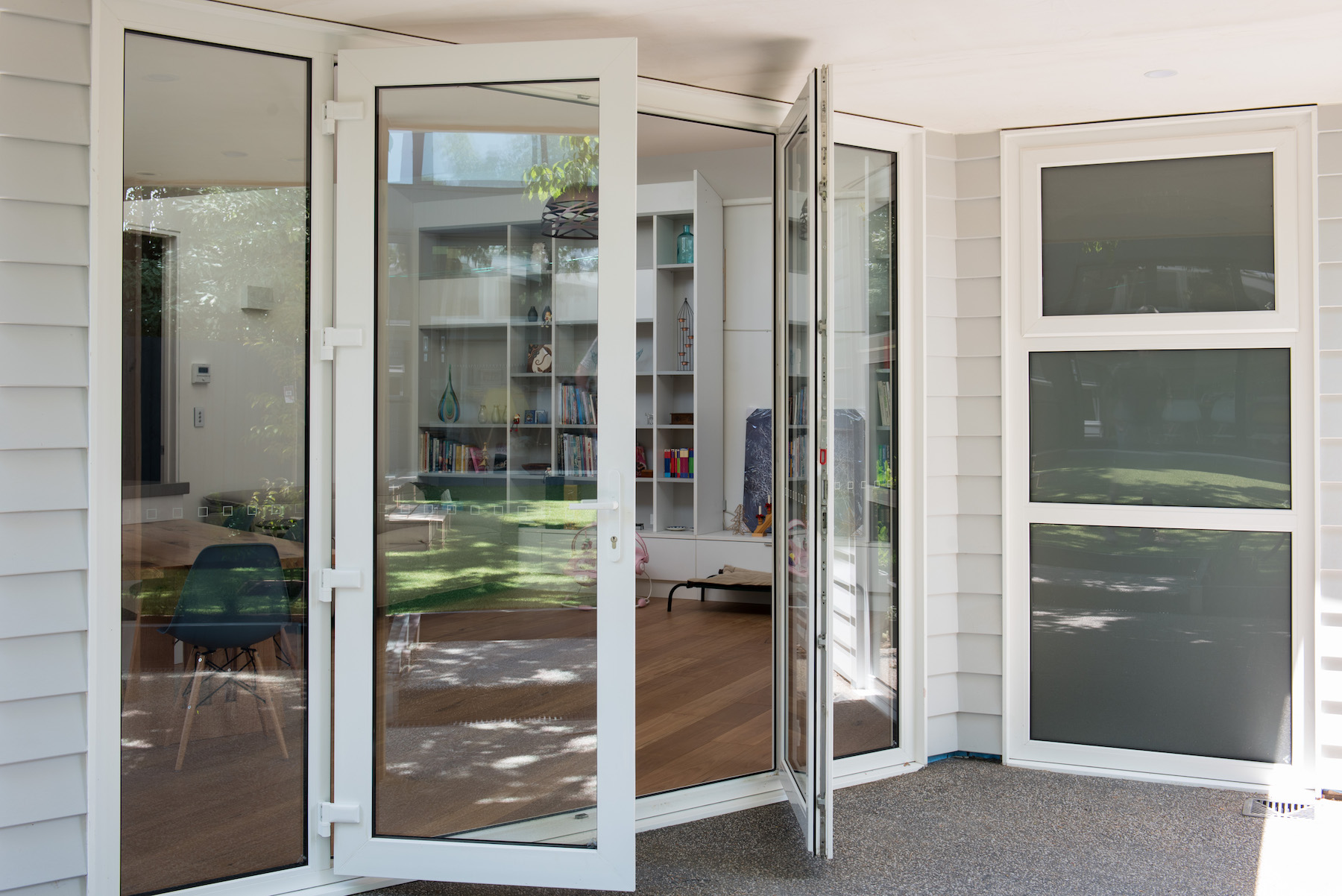
French doors are a pair of full-length glazed doors that open from the centre, hinged on either side, swinging inward or outward. They’re a classic choice for connecting living areas to outdoor spaces, and they’ve long been used to divide rooms while keeping things light and open.
With uPVC frames and double glazing, our French doors combine that timeless look with genuinely modern thermal and acoustic performance. They’re also available in a single-sash design where a full pair isn’t needed.
What are sliding doors?
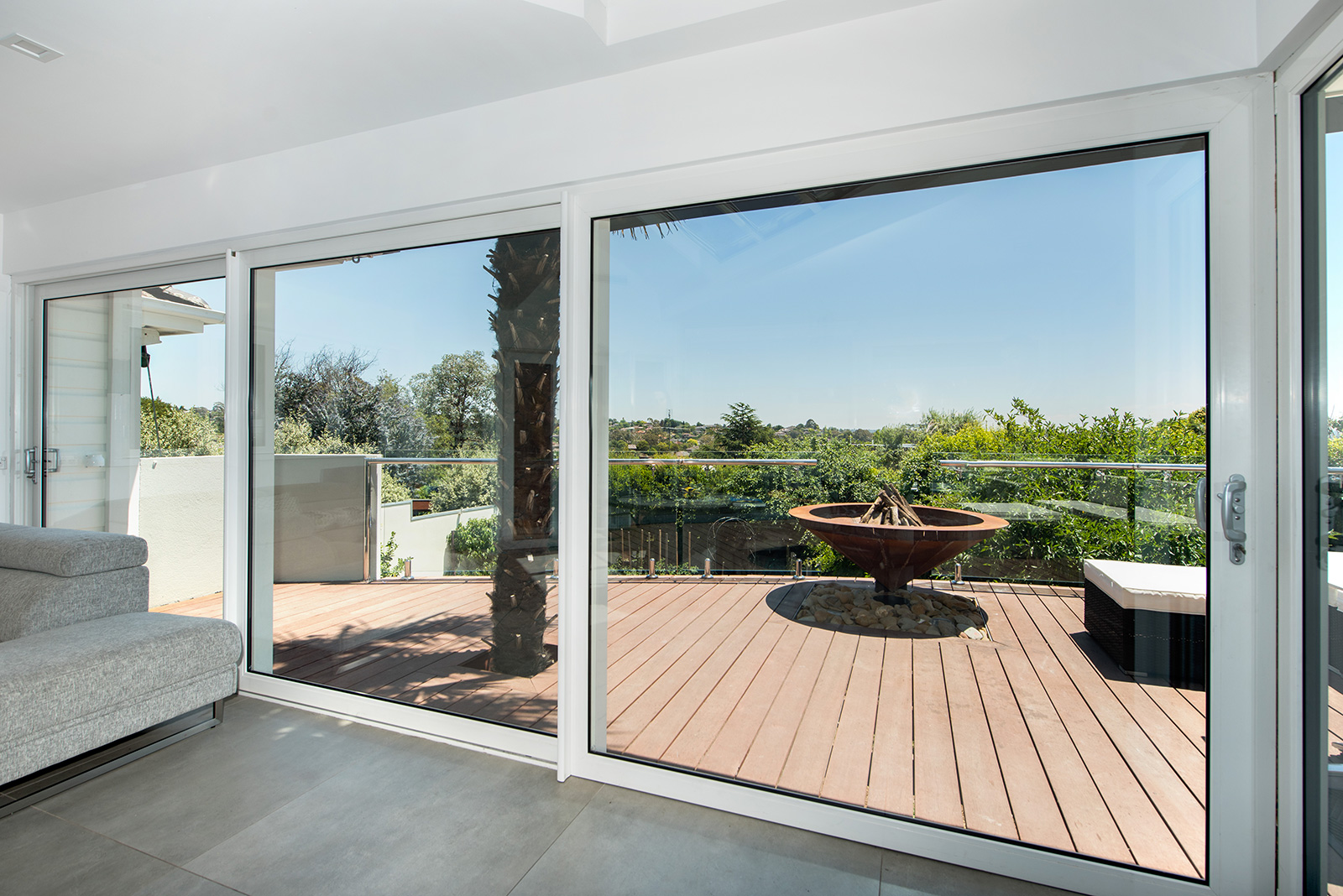
Sliding doors are large glass panels that glide horizontally along a track, rather than swinging into the room. One or more panels move past a fixed panel, giving you a broad, unobstructed view without eating into your floor space.
They’ve been a staple of Australian home design for decades, particularly for connecting kitchens and living areas to alfresco spaces and pool decks. Our uPVC sliding doors range covers the configurations and glazing options available for modern homes.
Sliding Doors vs French Doors Comparison
Ultimately, the correct decision comes down to evaluating specific lifestyle needs, such as a preference for ventilation styles or for child safety.
| Feature | Bi-fold doors | Sliding doors |
| Opening mechanism | Swings inward or outward on hinges | Glides horizontally along a track |
| Floor space required | Needs clearance to swing open, inside or outside | No swing clearance needed |
| Maximum practical width | Best suited to smaller-to-mid openings | Scales well to wide openings |
| Views when closed | Frame and hinge stile break up the glass line | Large, uninterrupted glass panels |
| Aesthetic | Classic, traditional | Clean, contemporary |
| Security | Multi-point locking, strong construction | Multi-point locking, toughened glass |
| Everyday ease of use | Requires more clearance and force to open fully | Simple push-pull, easy for kids or reduced mobility |
| Cost | Generally the more affordable option | Typically a larger investment for wider openings |
How Do Sliding Doors and French Doors Compare?
Space and opening width
This is usually the first thing to think through, and it’s where the two door types differ most.
French doors need clearance to swing open, either into the room or out onto the patio. If you’re tight on space inside, or your deck doesn’t leave much room outside the door line, that’s worth factoring in before you commit.
Sliding doors don’t need any of that. Because the panels move along a track rather than swinging out, you get to use every inch of floor space right up to the door, both inside and out. This makes them a practical option for smaller rooms, narrow decks, or high-traffic areas where furniture placement matters.
Views and Natural Light
Sliding doors generally offer the larger, less interrupted glass area, since there’s no hinge stile breaking up the middle of the opening. If an uninterrupted view of the garden is the priority, sliding doors usually have the edge.
French doors still let in plenty of natural light, and when fully open, they create a genuinely wide-open connection to the outdoors that some homeowners prefer over a sliding door’s partially fixed panel. It comes down to whether you value the view when the doors are closed, or the experience when they’re flung open.
Security
Both door types can be built to a high security standard in uPVC, and neither should be considered the more vulnerable option by default.
Our French and Entry doors use multi-point locking mechanisms and reinforced frame construction to resist forced entry, and our sliding doors use the same multi-point locking approach paired with toughened safety glass as standard. If it breaks under extreme force, it shatters into small, blunt pieces rather than dangerous shards, which is a requirement for large glazed areas under Australian building standards.
Energy Efficiency and NatHERS
Both door styles perform well thermally in uPVC, largely because the material itself has low thermal conductivity compared to aluminium. Pair either option with double glazing and you’ll see a genuine difference in heat retention and reduced energy bills.
This matters more than it might seem in Australia, where the Nationwide House Energy Rating Scheme (NatHERS) requires new homes and major renovations to meet a minimum 7-star thermal rating. Our uPVC French and sliding doors, built with Aluplast technology, already meet this standard, so whichever style you choose won’t hold your renovation back on compliance.
Maintenance and Durability
uPVC keeps maintenance low regardless of which door you choose. Neither option will rot, warp, or need repainting the way timber does, and a simple wipe-down is usually all that’s required to keep frames looking sharp.
The main practical difference is in the mechanism. French doors rely on hinges, which benefit from occasional lubrication to keep them swinging smoothly. Sliding doors run on a track system that can collect dust and debris over time, so it’s worth keeping the track clear for smooth, quiet operation. Both, when installed properly, are built to last for decades.
Bi-fold doors vs sliding doors: Cost
Cost is one of the most-searched aspects of this comparison, and it’s worth being straightforward: bi-fold doors are generally more Cost is one of the most common questions we get on this comparison, so it’s worth being upfront: French doors are generally the more affordable option, particularly for smaller openings.
Sliding doors can still be very cost-effective for standard widths, but the price gap tends to widen as the opening gets larger, since wider spans typically call for multi-panel configurations and more substantial hardware. A few things influence the final price either way:
- Opening size – wider apertures need more glass, frame material, and reinforcement
- Glazing specification – double glazing, triple glazing, and acoustic glass all affect the price
- Number of panels – more panels means more hardware and labour
- Colour and finish – designer colour ranges can add to the cost over standard white
- Installation complexity – site access, structural work, and existing opening condition all play a role
As a rough guide, French doors tend to be the better starting point if budget is the main driver, while sliding doors become more competitive as the opening gets wider.
Which Is Better for Your Space?
Rather than a one-size-fits-all answer, here’s how the choice tends to play out in practice:
Smaller or standard-width openings: French doors work well here, and often at a lower cost than an equivalent sliding door.
Wide openings or expansive views: Sliding doors handle wider apertures more efficiently and give you a larger, uninterrupted view of the garden.
Tight decks or narrow rooms: Sliding doors are the more practical choice, since there’s no swing clearance to account for on either side.
Traditional or period-style homes: French doors suit the architecture and add a classic finishing touch that sliding doors don’t replicate as naturally.
High-traffic entrances: Sliding doors are easier for everyday use, particularly for kids, older residents, or anyone carrying things through regularly.
Room dividers: French doors work well here too. Beyond outdoor access, they’re commonly used to separate living spaces while keeping the room feeling open when needed.
French or Sliding Doors – What to Consider Before You Decide
BBefore settling on a direction, it’s worth working through a few practical questions:
- How wide is your opening? Smaller openings suit French doors; wider ones often favour sliding doors.
- How much clearance do you have, inside and out? French doors need room to swing; sliding doors don’t.
- What’s the priority: the view, or the wide-open feel? Sliding doors maximise the glass line; French doors maximise the fully-open connection.
- What’s your budget? French doors are usually the more affordable entry point.
- What’s the style of your home? Classic and period homes tend to suit French doors; contemporary builds often lean toward sliding doors.
There’s no universally right answer here. Once you’ve worked through your opening, budget, and the look you’re after, the right choice usually becomes clear.
Explore Vue’s uPVC French and Sliding Doors
Still weighing it up? Get in touch with our team – we’re happy to talk through your specific opening, layout, and budget, and help you land on the right fit.
Vue Windows specialises in a full range of uPVC door styles, from entry & French doors and sliding doors, to bi-fold and smart slide doors.
When you choose Vue Windows, you benefit from:
- Superior energy efficiency
- Low-maintenance design
- Custom colours and styles
- Long-lasting durability
- Expert local installation across Melbourne
Ready to upgrade your home? Contact Vue Windows today for a consultation or quote to discover how our premium uPVC doors can transform your living space.
FAQs
Can you replace sliding doors with French doors?
In most cases, yes. If your opening size is suitable, French doors can be a straightforward swap. The main consideration is clearance, since French doors need room to swing open, so they work best where there’s space either inside or outside. Our team can assess your opening and advise on the best fit.
Are French doors or sliding doors more secure?
Both can be built to a high security standard in uPVC. Our French, Entry, and sliding doors all use multi-point locking systems and toughened glass, so neither should be considered the weaker option from a security standpoint.
Are sliding doors cheaper than French doors?
It depends on the opening size. For smaller apertures, French doors are typically the more affordable option. As openings get wider, the cost gap can narrow or even favour sliding doors, depending on the configuration.
Which is better for small spaces?
Sliding doors, since they don’t need swing clearance. If your deck or room is tight, sliding doors let you use the space right up to the door frame.
Do French doors or sliding doors perform better for energy efficiency?
Both perform well in uPVC with double glazing. Our doors meet the minimum 7-star NatHERS rating required for Australian homes and renovations, regardless of which style you choose.
How long do uPVC French and sliding doors last?
Our Aluplast uPVC doors are built to last a minimum of 10-25 years, depending on the door type and how well they’re maintained. If you ever run into an issue, get in touch and we’ll take a look.